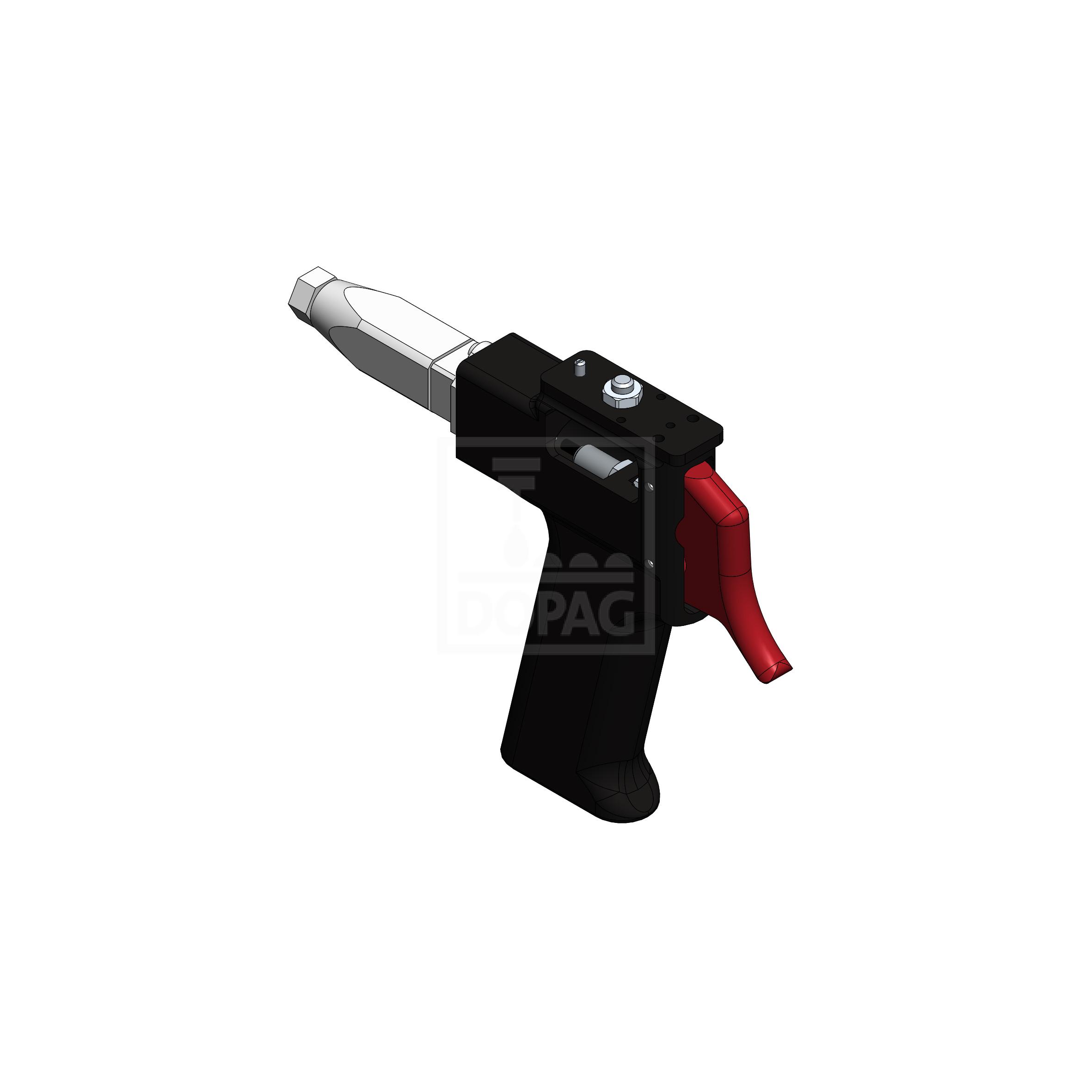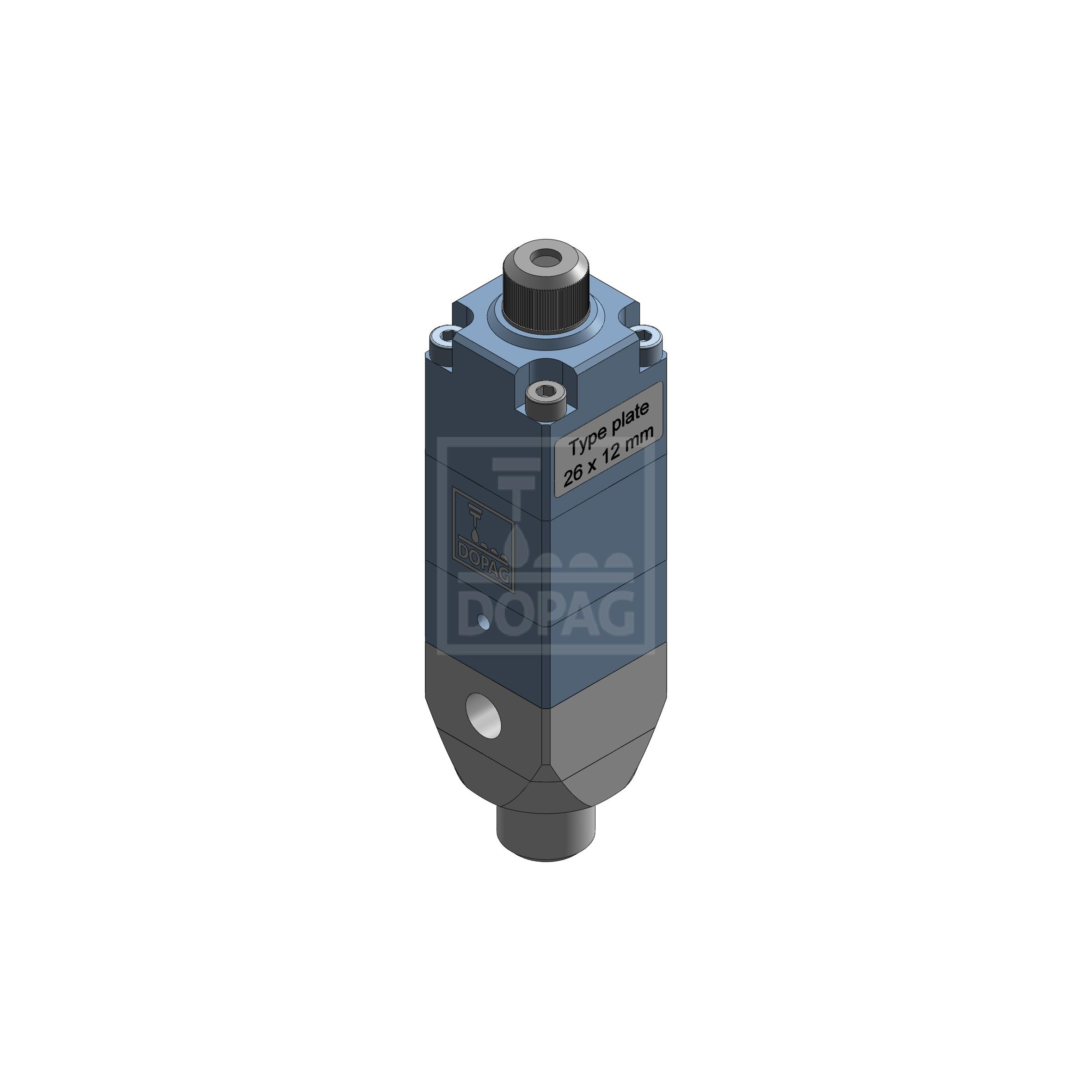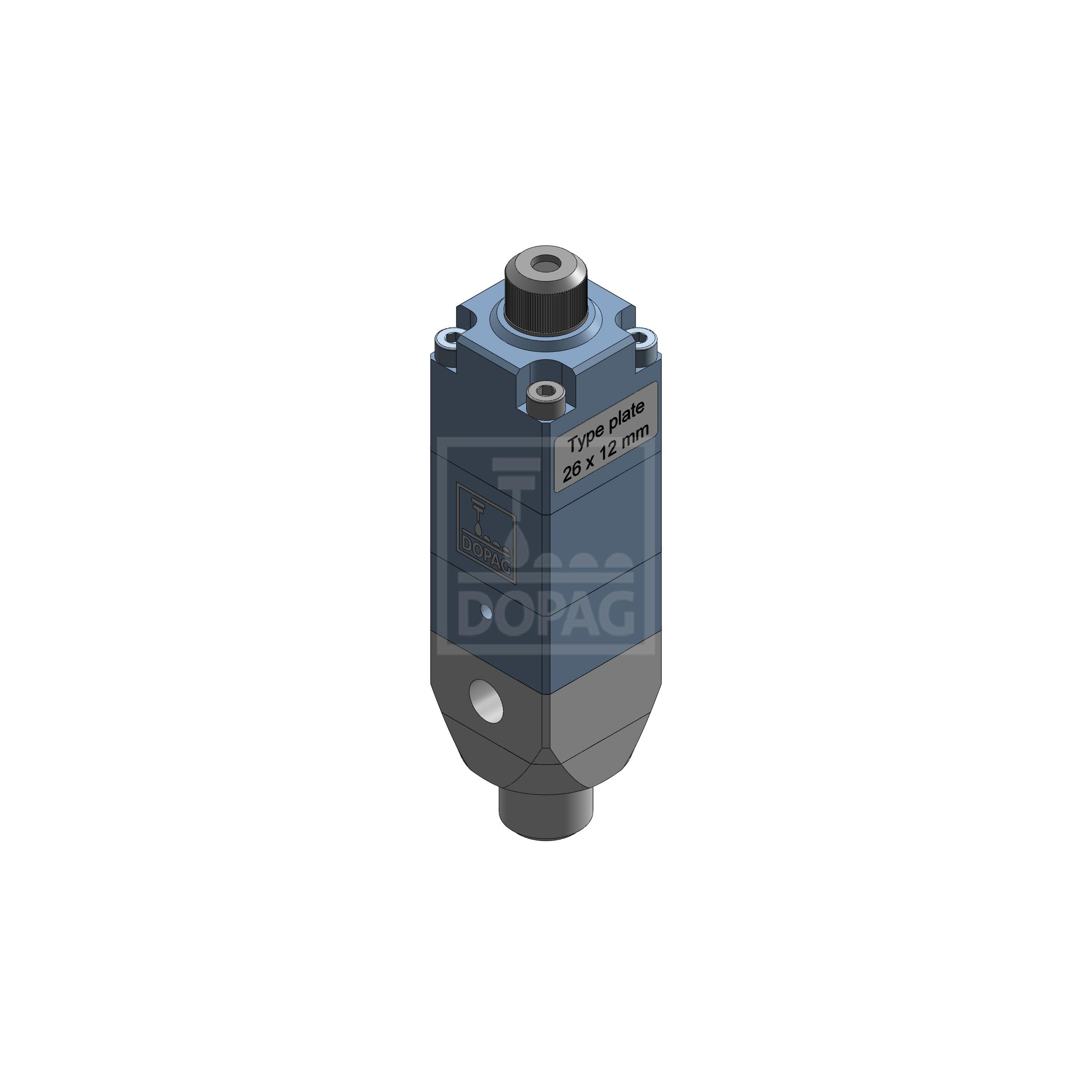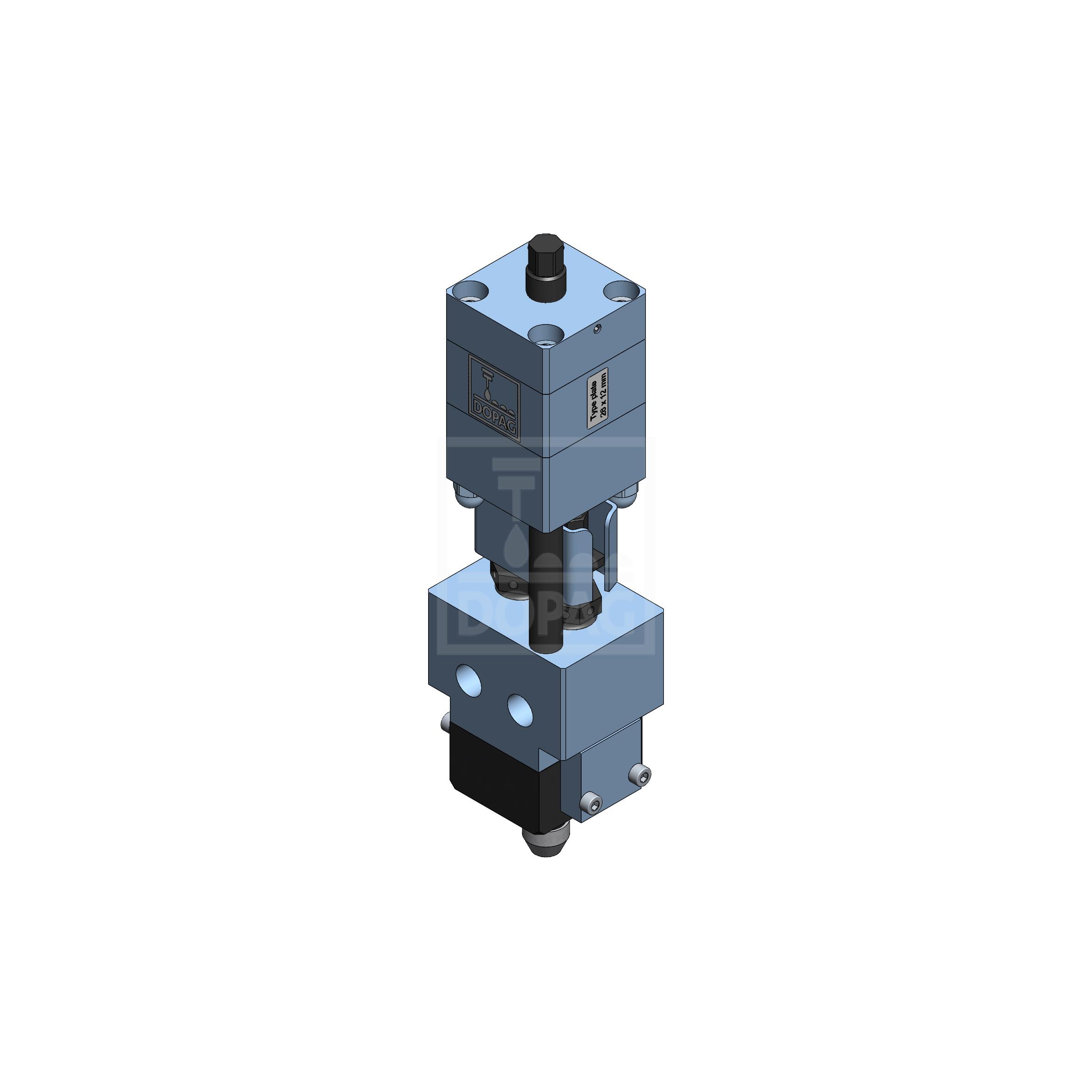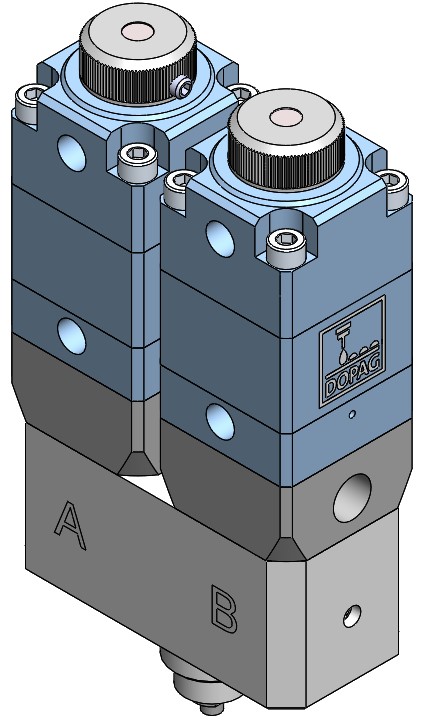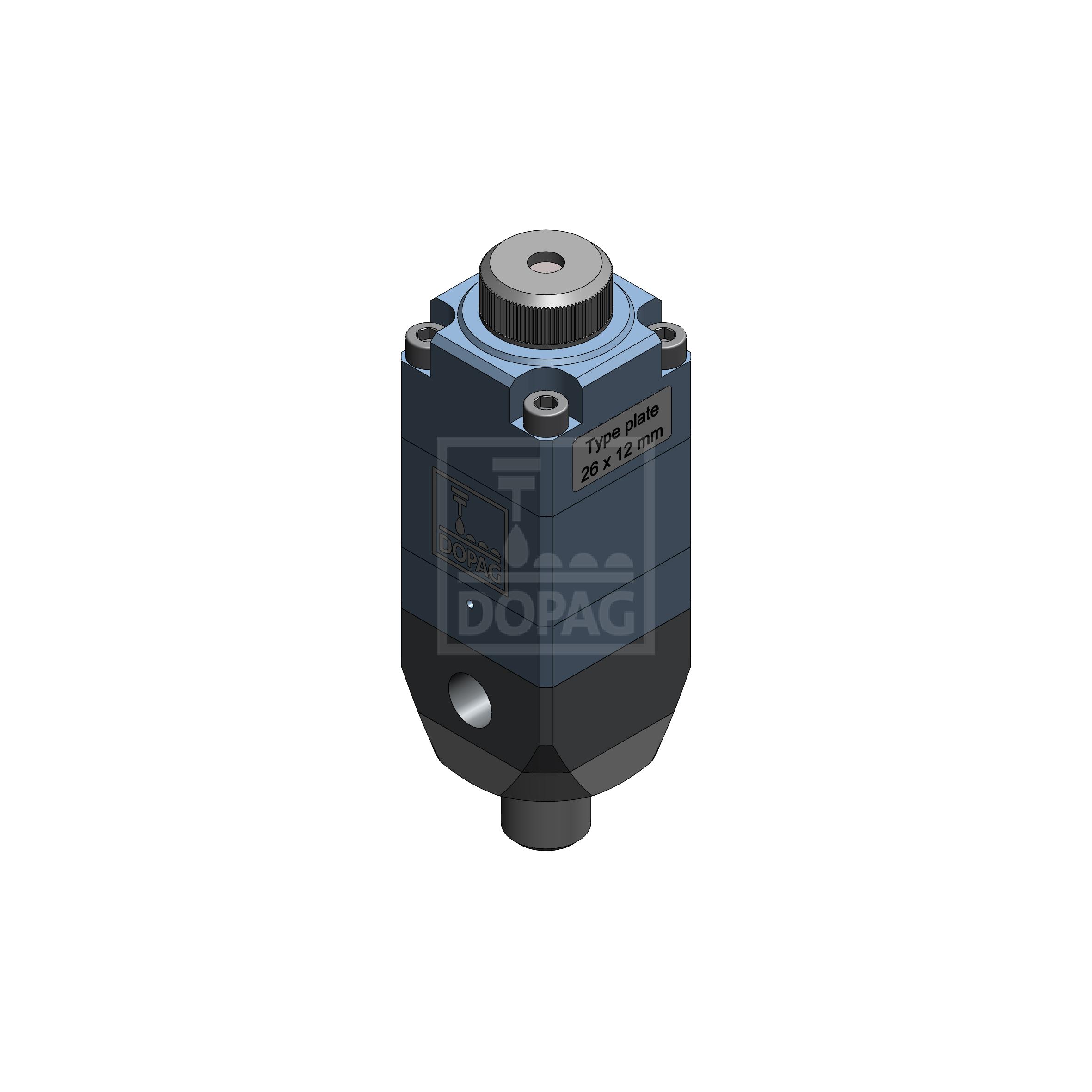
Handle with initiator
Price on request
Login
Product information "Handle with initiator"
| Type: | Handgriff |
|---|
Accessory Items
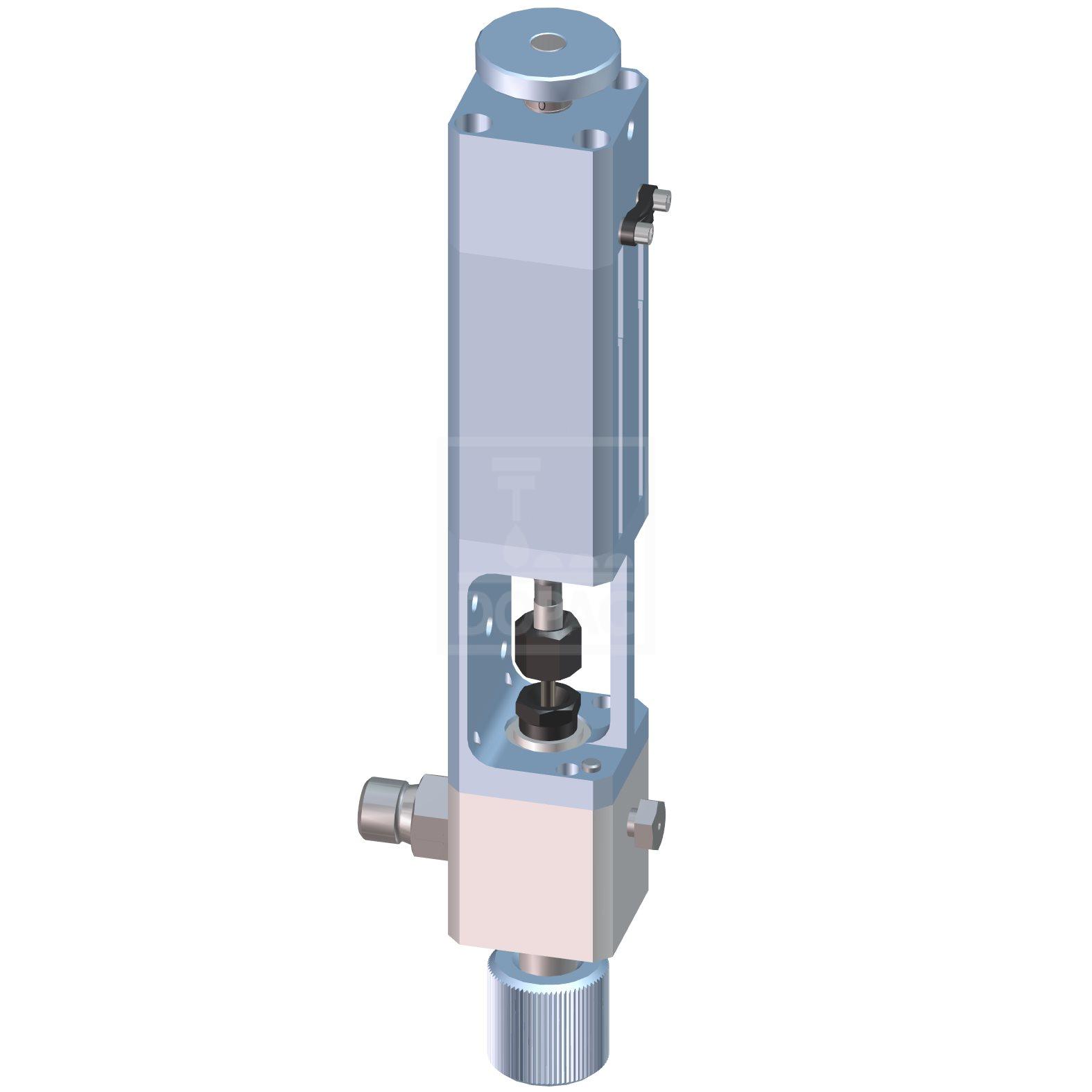
Needle metering valves are suitable for dot application of low to high viscosity media. With this series, very small quantities of up to 3 ml per shot can be discharged with high reproducibility and short cycle times. The valve consists of two structurally separate parts, meaning that material cannot leak into the drive cylinder and interfere with the movement of the valve needle. This feature makes the needle metering valve an exceptionally reliable and low-maintenance piece of metering equipment. Shot size is determined by the volume of the valve chamber, which can be adjusted simply within a predetermined range using a stop screw. The metering cycle can be controlled either pneumatically or electrically via a solenoid valve. DOPAG needle metering valves are perfectly suitable for manual applications with a handle as well as for fully automated processes.
Price on request
Needle metering valves are suitable for dot application of low to high viscosity media. With this series, very small quantities of up to 3 ml per shot can be discharged with high reproducibility and short cycle times. The valve consists of two structurally separate parts, meaning that material cannot leak into the drive cylinder and interfere with the movement of the valve needle. This feature makes the needle metering valve an exceptionally reliable and low-maintenance piece of metering equipment. Shot size is determined by the volume of the valve chamber, which can be adjusted simply within a predetermined range using a stop screw. The metering cycle can be controlled either pneumatically or electrically via a solenoid valve. DOPAG needle metering valves are perfectly suitable for manual applications with a handle as well as for fully automated processes.
Price on request
The advantage of diaphragm dispensing valves is their ability to process material with challenging properties in continuous shot applications. The valves are designed for care-free dispensing of low to high viscosity, filled or unfilled, abrasive or chemically reactive 1K fluids. Part of their structure is an integrated diaphragm that separates the pneumatic and the metering parts of the valve. As a result, only the valve head and the diaphragm come in contact with the material, while the material passageway can be easily flushed if necessary. The size of the orifice is regulated by stroke adjustment. Material dripping after shot completion is effectively prevented by the snuff-back mechanism. This valve is exceptionally easy on maintenance.
Price on request
DOPAG 2K valves are used to process 2K materials with similar viscosities and a relatively long pot life. Recommended mixing ratios are from 100:100 to 100:20. The static mixing system consists of pneumatic driven snuff back piston and a plastic mixer. Due to the infinitely adjustable snuff back function dripping is avoided when metering ends. Different sealing and material versions for chemically aggressive and abrasive 2K materials are available.
Price on request
Based on the time-pressure dispensing principle, the needle dispensing valves are most effective in continuous applications of low to high viscosity media. Consisting of two structurally separate parts, they have the advantage that material cannot leak into the drive cylinder and interfere with the valve needle movement. The size of the orifice is regulated simply by a stop screw. A special, adjustable seal closes the valve needle off from the valve head, ensuring a perfectly clean and precise application of every single shot. The material passageway can be flushed as and when necessary.
Price on request
The DOPAG dynastat is used to process 2K materials. With its static dnymic mixing principle it is ideal for high mixing ratios (e.g. 100:5) and when there is a large difference between the viscosities of A and B material. With the dynastat very small metering volumes can be achieved at small output rates. Different sealing and material versions for chemically aggressive and abrasive 2K materials are available.
Price on request
Based on the time-pressure dispensing principle, the needle dispensing valves are most effective in continuous applications of low to high viscosity media. Consisting of two structurally separate parts, they have the advantage that material cannot leak into the drive cylinder and interfere with the valve needle movement. The size of the orifice is regulated simply by a stop screw. A special, adjustable seal closes the valve needle off from the valve head, ensuring a perfectly clean and precise application of every single shot. The material passageway can be flushed as and when necessary.
Price on request
The DOPAG dynastat is used to process 2K materials. With its static dnymic mixing principle it is ideal for high mixing ratios (e.g. 100:5) and when there is a large difference between the viscosities of A and B material. With the dynastat very small metering volumes can be achieved at small output rates. Different sealing and material versions for chemically aggressive and abrasive 2K materials are available.
Price on request
Needle metering valves are suitable for dot application of low to high viscosity media. With this series, very small quantities of up to 3 ml per shot can be discharged with high reproducibility and short cycle times. The valve consists of two structurally separate parts, meaning that material cannot leak into the drive cylinder and interfere with the movement of the valve needle. This feature makes the needle metering valve an exceptionally reliable and low-maintenance piece of metering equipment. Shot size is determined by the volume of the valve chamber, which can be adjusted simply within a predetermined range using a stop screw. The metering cycle can be controlled either pneumatically or electrically via a solenoid valve. DOPAG needle metering valves are perfectly suitable for manual applications with a handle as well as for fully automated processes.
Price on request
DOPAG 2K valves are used to process 2K materials with similar viscosities and a relatively long pot life. Recommended mixing ratios are from 100:100 to 100:20. The static mixing system consists of pneumatic driven snuff back piston and a plastic mixer. Due to the infinitely adjustable snuff back function dripping is avoided when metering ends. Different sealing and material versions for chemically aggressive and abrasive 2K materials are available.
Price on request
Based on the time-pressure dispensing principle, the needle dispensing valves are most effective in continuous applications of low to high viscosity media. Consisting of two structurally separate parts, they have the advantage that material cannot leak into the drive cylinder and interfere with the valve needle movement. The size of the orifice is regulated simply by a stop screw. A special, adjustable seal closes the valve needle off from the valve head, ensuring a perfectly clean and precise application of every single shot. The material passageway can be flushed as and when necessary.
Price on request
DOPAG 2K valves are used to process 2K materials with similar viscosities and a relatively long pot life. Recommended mixing ratios are from 100:100 to 100:20. The static mixing system consists of pneumatic driven snuff back piston and a plastic mixer. Due to the infinitely adjustable snuff back function dripping is avoided when metering ends. Different sealing and material versions for chemically aggressive and abrasive 2K materials are available.
Price on request
The advantage of diaphragm dispensing valves is their ability to process material with challenging properties in continuous shot applications. The valves are designed for care-free dispensing of low to high viscosity, filled or unfilled, abrasive or chemically reactive 1K fluids. Part of their structure is an integrated diaphragm that separates the pneumatic and the metering parts of the valve. As a result, only the valve head and the diaphragm come in contact with the material, while the material passageway can be easily flushed if necessary. The size of the orifice is regulated by stroke adjustment. Material dripping after shot completion is effectively prevented by the snuff-back mechanism. This valve is exceptionally easy on maintenance.
Price on request
DOPAG 2K valves are used to process 2K materials with similar viscosities and a relatively long pot life. Recommended mixing ratios are from 100:100 to 100:20. The static mixing system consists of pneumatic driven snuff back piston and a plastic mixer. Due to the infinitely adjustable snuff back function dripping is avoided when metering ends. Different sealing and material versions for chemically aggressive and abrasive 2K materials are available.
Price on request
The advantage of diaphragm dispensing valves is their ability to process material with challenging properties in continuous shot applications. The valves are designed for care-free dispensing of low to high viscosity, filled or unfilled, abrasive or chemically reactive 1K fluids. Part of their structure is an integrated diaphragm that separates the pneumatic and the metering parts of the valve. As a result, only the valve head and the diaphragm come in contact with the material, while the material passageway can be easily flushed if necessary. The size of the orifice is regulated by stroke adjustment. Material dripping after shot completion is effectively prevented by the snuff-back mechanism. This valve is exceptionally easy on maintenance.
Price on request
DOPAG 2K valves are used to process 2K materials with similar viscosities and a relatively long pot life. Recommended mixing ratios are from 100:100 to 100:20. The static mixing system consists of pneumatic driven snuff back piston and a plastic mixer. Due to the infinitely adjustable snuff back function dripping is avoided when metering ends. Different sealing and material versions for chemically aggressive and abrasive 2K materials are available.
Price on request
Needle metering valves are suitable for dot application of low to high viscosity media. With this series, very small quantities of up to 3 ml per shot can be discharged with high reproducibility and short cycle times. The valve consists of two structurally separate parts, meaning that material cannot leak into the drive cylinder and interfere with the movement of the valve needle. This feature makes the needle metering valve an exceptionally reliable and low-maintenance piece of metering equipment. Shot size is determined by the volume of the valve chamber, which can be adjusted simply within a predetermined range using a stop screw. The metering cycle can be controlled either pneumatically or electrically via a solenoid valve. DOPAG needle metering valves are perfectly suitable for manual applications with a handle as well as for fully automated processes.
Price on request
The advantage of diaphragm dispensing valves is their ability to process material with challenging properties in continuous shot applications. The valves are designed for care-free dispensing of low to high viscosity, filled or unfilled, abrasive or chemically reactive 1K fluids. Part of their structure is an integrated diaphragm that separates the pneumatic and the metering parts of the valve. As a result, only the valve head and the diaphragm come in contact with the material, while the material passageway can be easily flushed if necessary. The size of the orifice is regulated by stroke adjustment. Material dripping after shot completion is effectively prevented by the snuff-back mechanism. This valve is exceptionally easy on maintenance.
Price on request
DOPAG 2K valves are used to process 2K materials with similar viscosities and a relatively long pot life. Recommended mixing ratios are from 100:100 to 100:20. The static mixing system consists of pneumatic driven snuff back piston and a plastic mixer. Due to the infinitely adjustable snuff back function dripping is avoided when metering ends. Different sealing and material versions for chemically aggressive and abrasive 2K materials are available.
Price on request
The advantage of diaphragm dispensing valves is their ability to process material with challenging properties in continuous shot applications. The valves are designed for care-free dispensing of low to high viscosity, filled or unfilled, abrasive or chemically reactive 1K fluids. Part of their structure is an integrated diaphragm that separates the pneumatic and the metering parts of the valve. As a result, only the valve head and the diaphragm come in contact with the material, while the material passageway can be easily flushed if necessary. The size of the orifice is regulated by stroke adjustment. Material dripping after shot completion is effectively prevented by the snuff-back mechanism. This valve is exceptionally easy on maintenance.
Price on request
The DOPAG dynastat is used to process 2K materials. With its static dnymic mixing principle it is ideal for high mixing ratios (e.g. 100:5) and when there is a large difference between the viscosities of A and B material. With the dynastat very small metering volumes can be achieved at small output rates. Different sealing and material versions for chemically aggressive and abrasive 2K materials are available.
Price on request
Based on the time-pressure dispensing principle, the needle dispensing valves are most effective in continuous applications of low to high viscosity media. Consisting of two structurally separate parts, they have the advantage that material cannot leak into the drive cylinder and interfere with the valve needle movement. The size of the orifice is regulated simply by a stop screw. A special, adjustable seal closes the valve needle off from the valve head, ensuring a perfectly clean and precise application of every single shot. The material passageway can be flushed as and when necessary.
Price on request
The DOPAG dynastat is used to process 2K materials. With its static dnymic mixing principle it is ideal for high mixing ratios (e.g. 100:5) and when there is a large difference between the viscosities of A and B material. With the dynastat very small metering volumes can be achieved at small output rates. Different sealing and material versions for chemically aggressive and abrasive 2K materials are available.
Price on request
The advantage of diaphragm dispensing valves is their ability to process material with challenging properties in continuous shot applications. The valves are designed for care-free dispensing of low to high viscosity, filled or unfilled, abrasive or chemically reactive 1K fluids. Part of their structure is an integrated diaphragm that separates the pneumatic and the metering parts of the valve. As a result, only the valve head and the diaphragm come in contact with the material, while the material passageway can be easily flushed if necessary. The size of the orifice is regulated by stroke adjustment. Material dripping after shot completion is effectively prevented by the snuff-back mechanism. This valve is exceptionally easy on maintenance.
Price on request
DOPAG 2K valves are used to process 2K materials with similar viscosities and a relatively long pot life. Recommended mixing ratios are from 100:100 to 100:20. The static mixing system consists of pneumatic driven snuff back piston and a plastic mixer. Due to the infinitely adjustable snuff back function dripping is avoided when metering ends. Different sealing and material versions for chemically aggressive and abrasive 2K materials are available.
Price on request
Needle metering valves are suitable for dot application of low to high viscosity media. With this series, very small quantities of up to 3 ml per shot can be discharged with high reproducibility and short cycle times. The valve consists of two structurally separate parts, meaning that material cannot leak into the drive cylinder and interfere with the movement of the valve needle. This feature makes the needle metering valve an exceptionally reliable and low-maintenance piece of metering equipment. Shot size is determined by the volume of the valve chamber, which can be adjusted simply within a predetermined range using a stop screw. The metering cycle can be controlled either pneumatically or electrically via a solenoid valve. DOPAG needle metering valves are perfectly suitable for manual applications with a handle as well as for fully automated processes.
Price on request
DOPAG 2K valves are used to process 2K materials with similar viscosities and a relatively long pot life. Recommended mixing ratios are from 100:100 to 100:20. The static mixing system consists of pneumatic driven snuff back piston and a plastic mixer. Due to the infinitely adjustable snuff back function dripping is avoided when metering ends. Different sealing and material versions for chemically aggressive and abrasive 2K materials are available.
Price on request
Needle metering valves are suitable for dot application of low to high viscosity media. With this series, very small quantities of up to 3 ml per shot can be discharged with high reproducibility and short cycle times. The valve consists of two structurally separate parts, meaning that material cannot leak into the drive cylinder and interfere with the movement of the valve needle. This feature makes the needle metering valve an exceptionally reliable and low-maintenance piece of metering equipment. Shot size is determined by the volume of the valve chamber, which can be adjusted simply within a predetermined range using a stop screw. The metering cycle can be controlled either pneumatically or electrically via a solenoid valve. DOPAG needle metering valves are perfectly suitable for manual applications with a handle as well as for fully automated processes.
Price on request
DOPAG 2K valves are used to process 2K materials with similar viscosities and a relatively long pot life. Recommended mixing ratios are from 100:100 to 100:20. The static mixing system consists of pneumatic driven snuff back piston and a plastic mixer. Due to the infinitely adjustable snuff back function dripping is avoided when metering ends. Different sealing and material versions for chemically aggressive and abrasive 2K materials are available.
Price on request
The advantage of diaphragm dispensing valves is their ability to process material with challenging properties in continuous shot applications. The valves are designed for care-free dispensing of low to high viscosity, filled or unfilled, abrasive or chemically reactive 1K fluids. Part of their structure is an integrated diaphragm that separates the pneumatic and the metering parts of the valve. As a result, only the valve head and the diaphragm come in contact with the material, while the material passageway can be easily flushed if necessary. The size of the orifice is regulated by stroke adjustment. Material dripping after shot completion is effectively prevented by the snuff-back mechanism. This valve is exceptionally easy on maintenance.
Price on request
DOPAG 2K valves are used to process 2K materials with similar viscosities and a relatively long pot life. Recommended mixing ratios are from 100:100 to 100:20. The static mixing system consists of pneumatic driven snuff back piston and a plastic mixer. Due to the infinitely adjustable snuff back function dripping is avoided when metering ends. Different sealing and material versions for chemically aggressive and abrasive 2K materials are available.
Price on request
Based on the time-pressure dispensing principle, the needle dispensing valves are most effective in continuous applications of low to high viscosity media. Consisting of two structurally separate parts, they have the advantage that material cannot leak into the drive cylinder and interfere with the valve needle movement. The size of the orifice is regulated simply by a stop screw. A special, adjustable seal closes the valve needle off from the valve head, ensuring a perfectly clean and precise application of every single shot. The material passageway can be flushed as and when necessary.
Price on request